Original 1947 Dutch Marines Photo Album in the Dutch East Indies
500 €
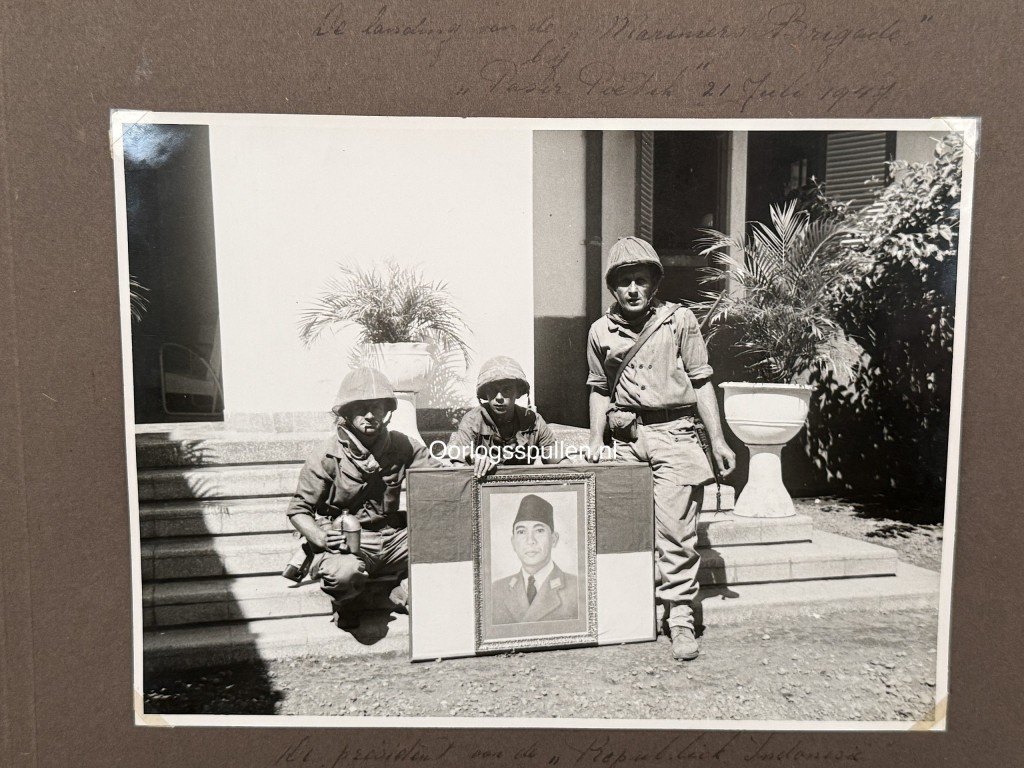
This exceptional photo album from 1947 forms a rare visual record of the deployment of the Royal Netherlands Marine Corps during the campaign in the Dutch East Indies. The album was compiled by a direct participant and contains 89 original black-and-white photographs, largely sharp and rich in contrast, many of them accompanied by contemporary handwritten captions. The largest photographs in the album measure 24 × 18 cm, which is notably large for field photography of this period.
Together, the images tell a complete and chronological story, ranging from preparation and embarkation to amphibious landings, military operations ashore, and the visible consequences for the local population. The photographs document the preparation and execution of large-scale amphibious operations. Marines are shown descending rope nets along ship sides, assembling on deck, and transferring to landing craft. Wide-angle views reveal multiple LSTs and landing craft operating in formation, clearly indicating a coordinated military operation rather than an isolated action. The landing itself is captured in detail, with tracked amphibious vehicles (LVTs) reaching the beach, grounding in the surf, and unloading troops and equipment under supervision.
After the landing, the focus shifts to the advance inland and the consolidation of control. The album shows marines operating tracked vehicles through rivers, dry riverbeds, and difficult terrain, crossing bridges and roads, and entering villages. Engineering and recovery activities are extensively documented, including damaged infrastructure, improvised dikes, road reinforcement, and the movement of heavy equipment, often carried out with the assistance of local labor under military supervision. The presence of armored vehicles, tracked carriers, and artillery emphasizes the military dominance and structural nature of the operation.
Particularly striking and historically significant is the depiction of the civilian population. Large groups of men, women, and children gather around military vehicles, observe the advancing troops, or are guided along roads and through villages. One especially powerful photograph shows a long procession of civilians—walking and cycling, carrying their belongings, quietly illustrating the displacement and disruption caused by the operations.
The album also includes a rare image of anti-Dutch propaganda, explicitly portraying Dutch forces as aggressors and war criminals. This clearly demonstrates that the conflict was fought not only on a military level, but also through ideological and psychological means.
Between combat-related scenes, the album offers insight into the daily life of the marines: vehicle maintenance, discussions around jeeps and machine guns, inspections by officers, as well as moments of rest, relaxation, and improvisation in the tropical climate. These unposed photographs give the album a personal and candid character, making clear that it was not intended as official propaganda, but as an internal and personal record.
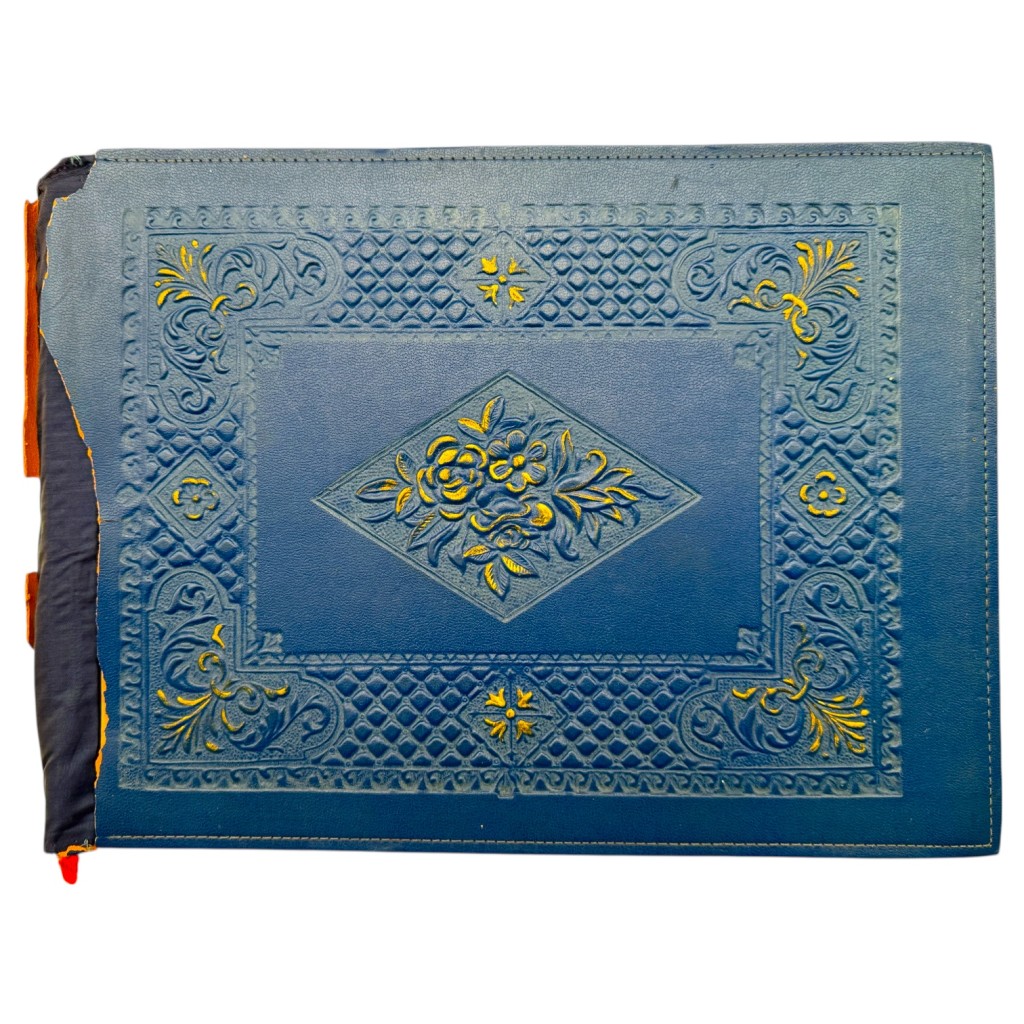
The album concludes with photographs of the album itself: a blue, richly decorated cover with gold accents and cord binding, visibly used yet carefully preserved.
Taken together, these images form a complete and unfiltered field record of a Dutch military operation in 1947, combining preparation, execution, daily soldier life, and the impact on the civilian population. It is a unique album for collectors of Royal Netherlands Marines history, the Police Actions, and the broader history of the decolonization of the Dutch East Indies.
Article number: 17822
Origineel 1947 Nederlands Mariniers fotoalbum Politionele Acties in Nederlands-Indië
Dit uitzonderlijke fotoalbum uit 1947 vormt een zeldzaam visueel verslag van de inzet van de Nederlandse Mariniers tijdens de Politionele Acties in Nederlands-Indië. Het album is samengesteld door een direct betrokkene en bevat 89 originele zwart-witfoto’s, grotendeels scherp en contrastrijk, veelal voorzien van contemporaine bijschriften. De grote foto’s in dit album hebben de afmetingen van 24 x 18 cm. Samen vertellen de beelden een volledig en chronologisch verhaal: van voorbereiding en inscheping tot amfibische landing, militaire operaties op land en de zichtbare gevolgen voor de lokale bevolking. De foto’s tonen de voorbereiding en uitvoering van grootschalige amfibische operaties. Mariniers dalen via netten langs de scheepswand af, verzamelen zich op het dek en stappen over in landingsvaartuigen. Overzichtsbeelden laten meerdere LST’s en landingsvaartuigen in formatie zien, wat duidelijk maakt dat het hier geen geïsoleerde actie betreft maar een gecoördineerde militaire operatie. Vervolgens leggen de foto’s de landing zelf vast: rupslandingsvaartuigen (LVT’s) die het strand bereiken, vastlopen in de branding en hun lading lossen, terwijl mariniers en materieel onder toezicht aan land gaan. Na de landing verschuift de aandacht naar de opmars en consolidatie op land. Het album toont mariniers die met rupsvoertuigen door rivieren, droge bedding en moeilijk terrein trekken, bruggen en wegen passeren en dorpen binnengaan. Genie- en herstelwerkzaamheden zijn uitvoerig gedocumenteerd: beschadigde infrastructuur, geïmproviseerde dijken, wegverharding en het verplaatsen van zwaar materieel, vaak met hulp van lokale arbeidskrachten onder militair toezicht. De aanwezigheid van pantserwagens, rupsvoertuigen en artillerie toont het militaire overwicht en het structurele karakter van de operatie. Opvallend en historisch zeer betekenisvol is de manier waarop de burgerbevolking in beeld komt. Grote groepen mannen, vrouwen en kinderen verzamelen zich rond voertuigen, kijken toe bij de opmars of worden langs wegen en door dorpen geleid. Een indringende foto toont een lange stoet burgers, lopend en fietsend, beladen met bezittingen. Daarnaast bevat het album een zeldzame opname van anti-Nederlandse propaganda, waarin de Nederlandse militairen expliciet als agressors en oorlogsmisdadigers worden aangeduid. Dit maakt duidelijk dat het conflict niet alleen militair, maar ook ideologisch en psychologisch werd uitgevochten. Tussen de gevechtshandelingen door laat het album het dagelijks leven van de mariniers zien: onderhoud aan voertuigen, overleg bij jeeps en mitrailleurs, inspecties door officieren, maar ook momenten van rust, ontspanning en improvisatie in het tropische klimaat. Deze ongeposeerde beelden geven het album een persoonlijke en eerlijke toon en maken duidelijk dat het niet is bedoeld als officieel propagandamateriaal, maar als een intern en persoonlijk verslag. Het geheel wordt afgerond door foto’s van het album zelf: een blauw, rijk bewerkt omslag met goudaccenten en koordbinding, zichtbaar gebruikt maar zorgvuldig bewaard.
Samen vormen deze beelden een volledig en ongefilterd veldverslag van een Nederlandse militaire operatie in 1947, waarin voorbereiding, uitvoering, dagelijks soldatenleven én de impact op de burgerbevolking samenkomen.
Een uniek album voor verzamelaars van het Korps Mariniers, de Politionele Acties en de bredere geschiedenis van de dekolonisatie van Nederlands-Indië.
Artikelnummer: 17822
Out of stock